1934 Image Shows Spokane River’s Industrial South Channel
Factories and transportation infrastructure once dominated the river gorge’s southern edge.
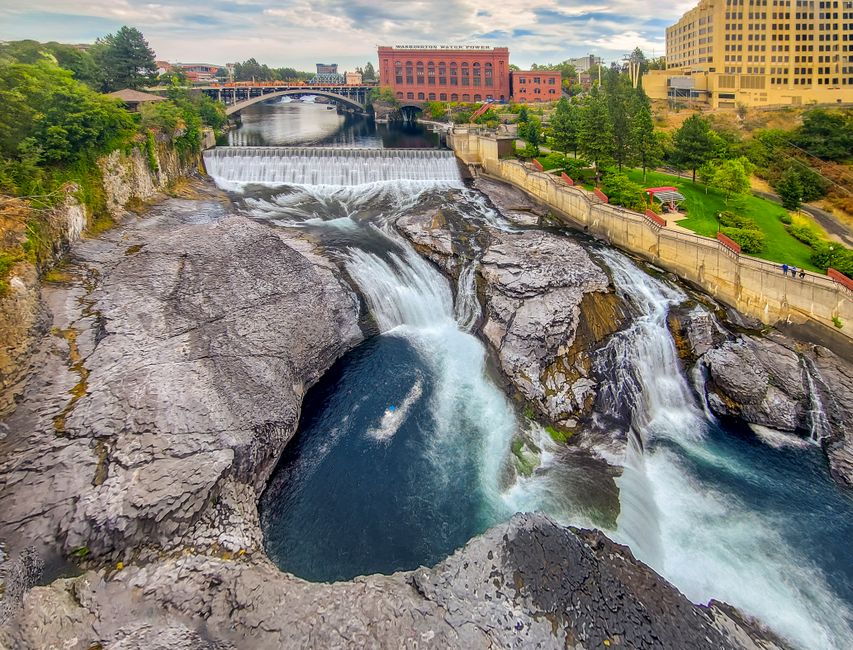
By 1934, industrial development along the Spokane River’s south channel had reached its height. Rail tracks, trestles, warehouses, power facilities and a lumber operation crowded the downtown gorge, concealing much of its natural scenery for almost a century.
The lumber business began around 1871 through the work of James J. Downing. Seth R. Scranton was his partner, and James Glover assumed control several years afterward. Following an 1892 fire, the mill was rebuilt. Its pond held rail shipments of logs awaiting processing. Under several names, the operation lasted more than 70 years before closing in 1944.
Hydroelectric development arrived in the 1880s. Washington Water Power completed its first generating facility beneath the Monroe Street Bridge in 1890. The Upper Falls Power Plant later incorporated water once used by the original mill and began operating in 1921. Meanwhile, stations for major and smaller railroads filled the downtown riverfront. After national passenger rail travel peaked in 1944, local renewal planning started in the 1960s. Work ahead of Expo ’74 removed rails, stations, mill remnants and warehouses, dramatically changing the riverfront landscape Spokane residents know today.
- The image dates to 1934.
- The first lumber mill was built around 1871.
- The lumber operation closed in 1944.
- Upper Falls Power Plant opened in 1921.
- Expo ’74 preparations removed rail and industrial structures.
Source: The Spokesman-Review ↗
Summarized from the reporting above. Read it for the full story.
An AI receptionist that answers your business calls around the clock, so no lead goes to voicemail.
See how it works →

Get briefs like this by email